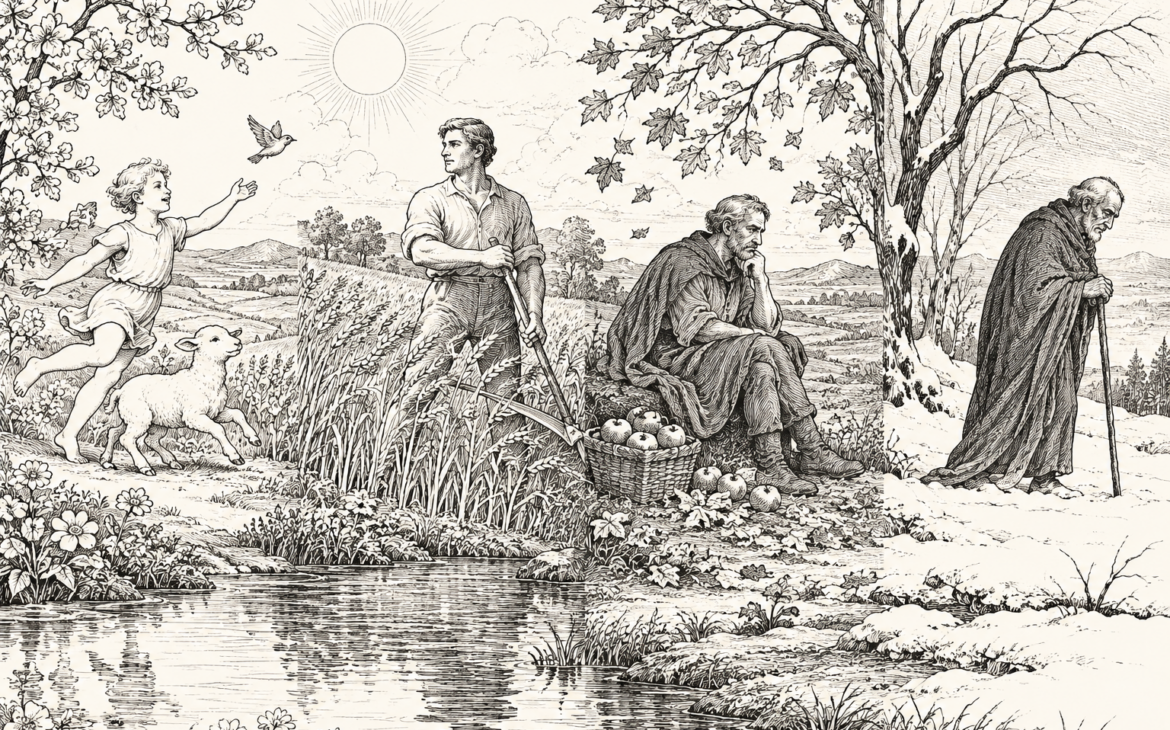
Freneau first published “The Seasons Moralized” in Bailey’s Pocket Almanac for 1785. In it, he relates the cycle of the seasons to the periods of a human lifetime. But while spring returns after “Winter’s gloom,” youth does not return to man after old age.
As someone who spent much time in the tropical West Indies, Freneau no doubt appreciated the sense of change and renewal brought about by the seasonal cycle in New Jersey. These natural variations “charm” us here in a temperate climate. In contrast, the tropics are warm but may dull our experience of “Life’s picture” — a resonance with Nature synchronized with the changing of the seasons.
— Barry Orr
They who to warmer regions run,
May bless the favour of the sun,
But seek in vain what charms us here,
Life’s picture, varying with the year.
Spring, and her wanton train advance
Like Youth to lead the festive dance,
All, all her scenes are mirth and play,
And blushing blossoms own her sway.
The Summer next (those blossoms blown)
Brings on the fruits that spring had sown,
Thus men advance, impelled by time,
And Nature triumphs in her prime.
Then Autumn crowns the beauteous year,
The groves a sicklier aspect wear;
And mournful she (the lot of all)
Matures her fruits, to make them fall.
Clad in the vestments of a tomb,
Old age is only Winter’s gloom—
Winter, alas! shall spring restore,
But youth returns to man no more.
NO COMMENTS