by Pat Noble
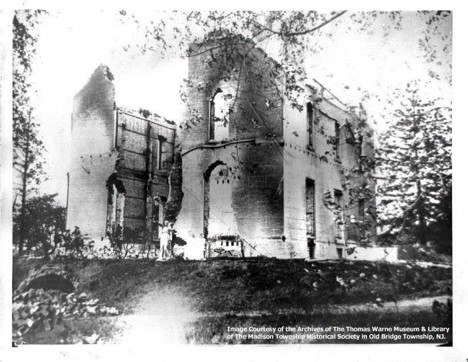
The Matawan Journal’s 10 October 1918 edition provides a chilling account of the Thomas A Gillespie Shell Loading Munitions Plant explosion of 4 October, only days after the occurrence at nearby Morgan, New Jersey. Excerpts and summaries of that text are presented below, followed by additional details of interest.
“At 7:45 o’clock Friday night, an explosion occurred which shook the houses in this community and was felt for miles. Those who were outdoors recognized that something had happened in the vicinity of the T A Gillespie Loading Plant at Morgan, the glare in the sky giving the location. In rapid succession one explosion followed another, some being louder than others, and these continued at intervals all night and until about 2 o’clock Saturday afternoon.”
“The first explosions occurred in the Shell plant 6-1-1, located near the Cheesequake Road on the westerly side of the plant. The building is filled with girls and women during the day, and men at night.
“At Keyport, Matawan and South Amboy and other places residents were ordered from their homes at 3 o’clock in the morning. . .”
“Probably 100 buildings were demolished by explosions or fire and the plant is practically a complete wreck. . . Many carloads of shells were stored on sidings to be pulled out, but only a few got beyond the flame zone. How many were killed will never be known as only pieces of bodies will be found when the time comes for searching when the ruins are reached.”
“The explosions were felt as far as New York and for nearly fifty miles south.”
“At Matawan and Keyport there was absolutely no business done. The residents were ordered out of their properties and the banks and stores were tenantless. Somewhat of damage was done to the business places in both towns, Keyport suffering the most. Plateglass windows were also destroyed. Memorial windows in the Baptist and Methodist churches in Keyport and the Methodist church at Matawan were destroyed. . . .”
Soldiers from area military bases were assigned to guard the roads around the plant and to protect the evacuated properties in nearby towns.
48 bodies were recovered from the munition plant at Morgan and buried in Ernston Cemetery on 9 Oct 1918. Complete bodies were placed in individual coffins, while the rest were placed in a common grave. The Red Cross transported to the cemetery by ambulance and Catholic, Protestant and Jewish burial rites were performed.
Charles River, of Matawan, was injured in the explosion. He was being treated to issues with his left arm, leg and back.
———————————
The public was curious about the plant explosion, but sightseeing of the immediate sight was restricted by the military. However, shells had fired off in all directions, so some unexploded ordnance was discovered outside of the cordon, even in neighboring towns.
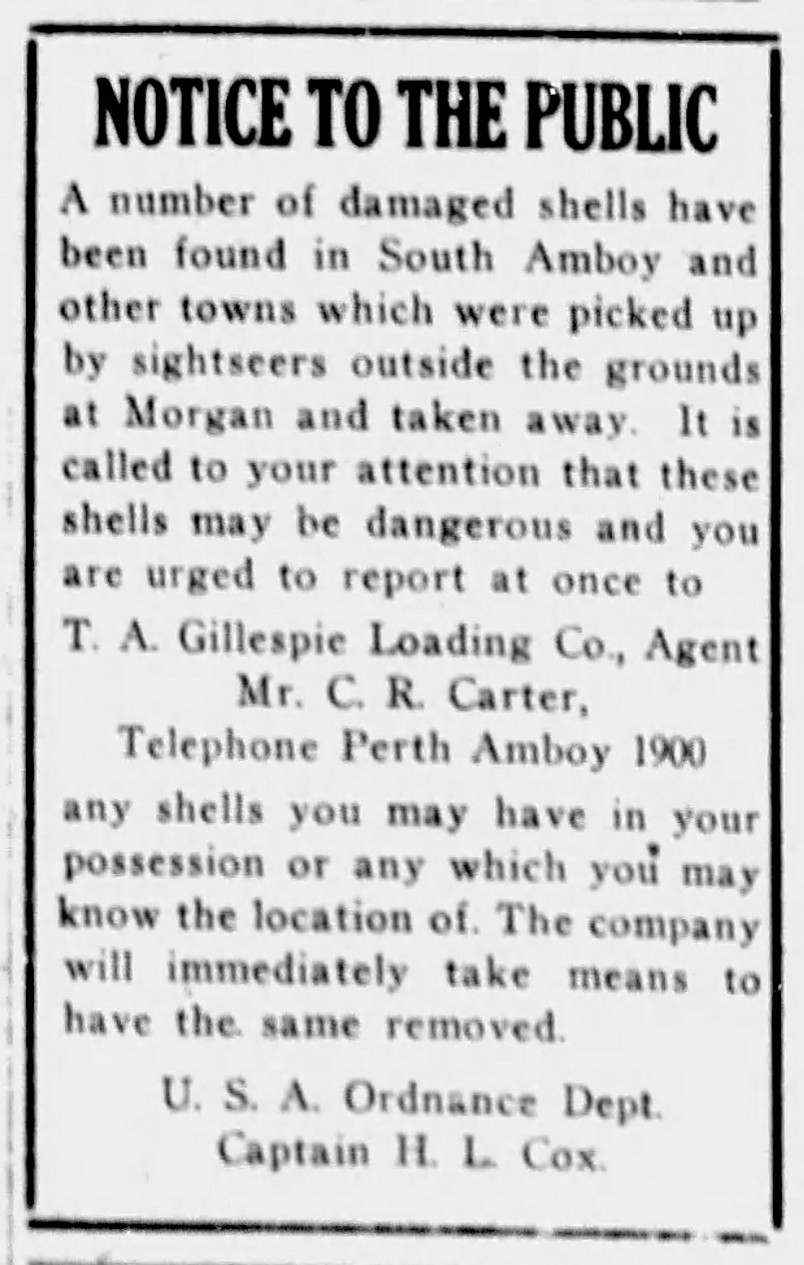
Figure 1 Public warned of unexploded ordnance (Matawan Journal, 31 Oct 1918)
The US Government had placed the Gillespie plant in Morgan during the World War to provide ordnance for the fight against Germany. It would be on a railroad line to facilitate delivery of munitions to the ports up north. And they thought the site would be remote enough to be safe yet close enough to a large labor force living within an easy commute by trolley or railroad.
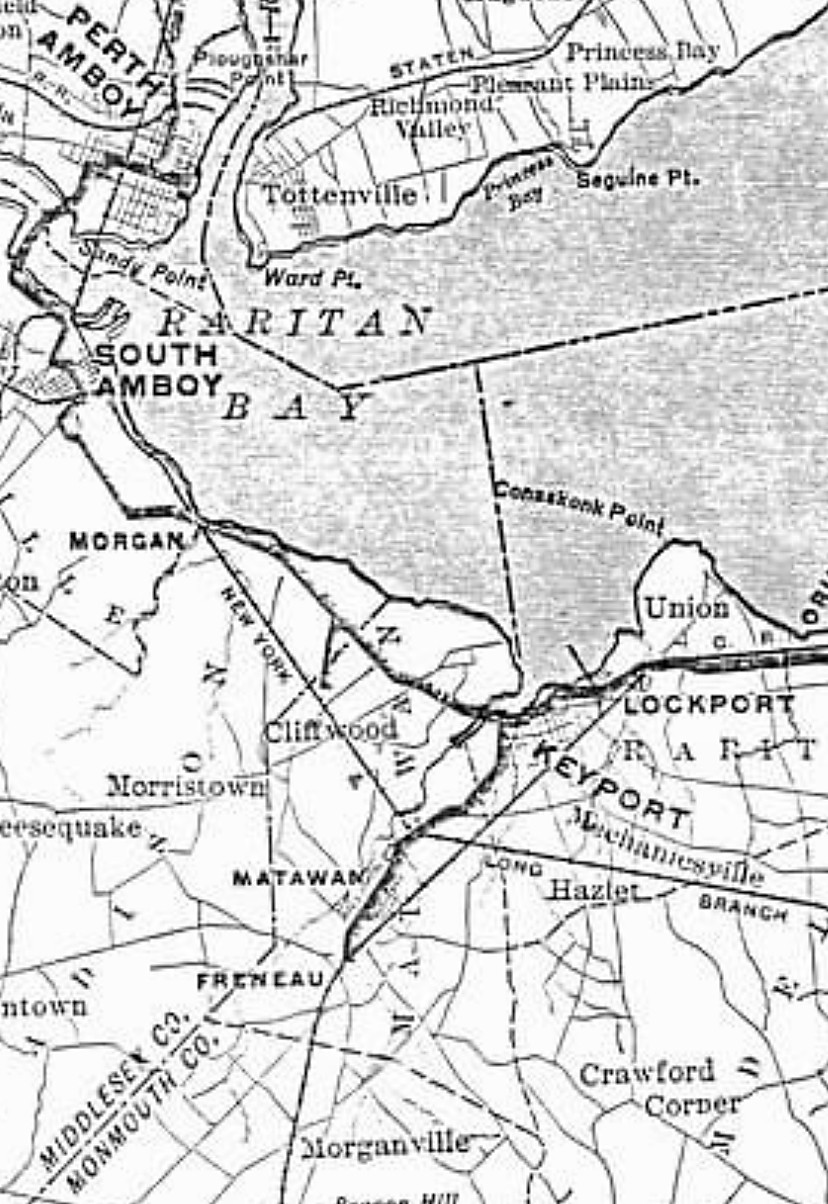
Figure 2 Traction company map
“The spot selected for this government assembling plant is ideally located for such a factory, being isolated from any houses, but near enough to Perth Amboy, South Amboy, Keyport, Matawan and Red Bank to make it an easy matter to secure labor. There is a railroad station at Morgan which will be of the greatest convenience in bringing workers to the plant. A trolley line runs near the plant, and it is reported that the tracks will be extended to run directly to the factories.”
Source: Perth Amboy Evening News, 22 Dec 1917
“The government will erect at Morgan the largest munition plant in the United States, options for over 1,300 acres of land. . . There is a railroad station at Morgan and the Jersey Central Traction Company passes close by. . .”
Source: Keyport Weekly, 28 Dec 1917
Morgan, New Jersey was a station stop of the New York and Long Branch Railroad in the Sayreville section of Madison Township (present day Old Bridge) in Middlesex County, NJ. The station was situated between the Cliffwood station and South Amboy station.
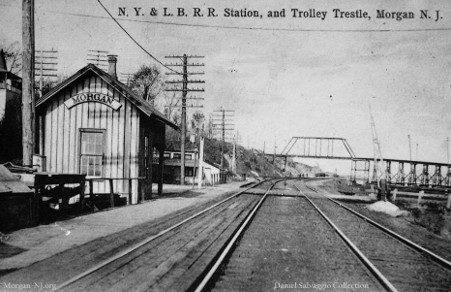
Figure 3 Morgan Station and Trolley Bridge
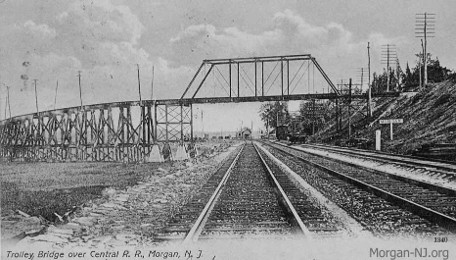
Figure 4 Trolley bridge over Central Jersey RR at Morgan
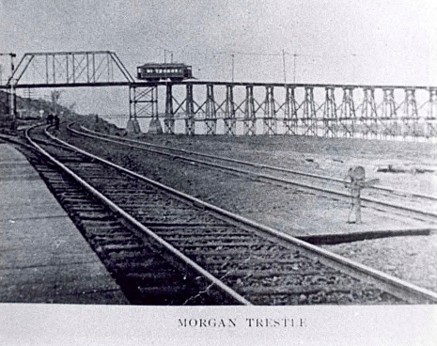
Figure 5 Morgan Trestle
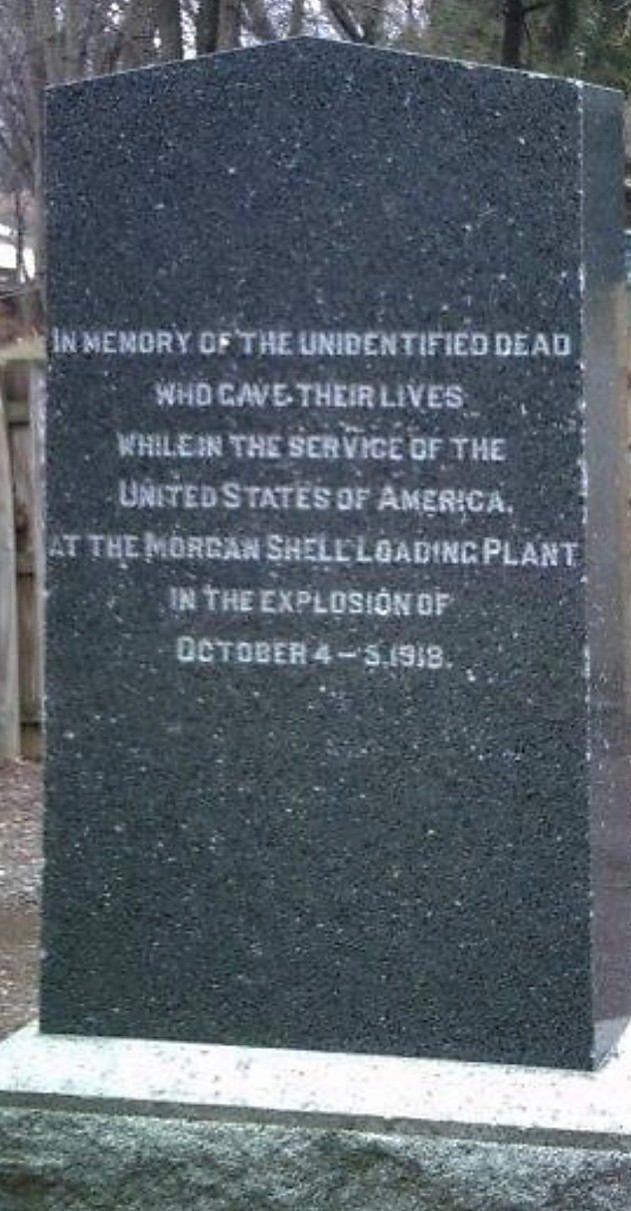
The unidentified dead are memorialized by the above granite monument at Ernston Cemetery, 328 Ernston Road in Parlin. The 20-by-35-foot grave it rests upon contains the unidentifiable remains of workers killed in the disaster. The South Amboy Lions Club placed the monument in 1929.
See Atlas Obscura for additional information about the plant explosion.
Rediscovering the Ruins of a Catastrophic WWI Explosion Everyone Forgot – Atlas Obscura (https://www.atlasobscura.com/articles/the-explosion-of-the-t-a-gillespie-company-shell-loading-plant)
NO COMMENTS