The Civil War Veterans of J. G. Shackelton Post
When the Civil War ended in 1865, the soldiers who returned to Matawan and the surrounding communities carried experiences that would remain with them for the rest of their lives. Like veterans elsewhere in the country, they sought the companionship of men who understood those experiences and a means of honoring those who had not returned. Founded in 1866, The Grand Army of the Republic, commonly known as the GAR, became one of the most important organizations through which Union veterans maintained those bonds.
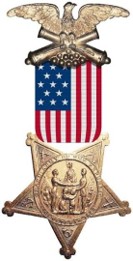 Its local chapters, called posts, brought former soldiers together for fellowship, remembrance, assistance to fellow veterans, and public commemorations. The organization also became closely associated with Memorial Day observances. In an era before the American Legion and other modern veterans’ organizations, the GAR gave the Civil War generation a lasting public presence.
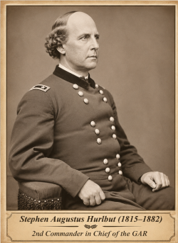
The GAR is connected to me personally. The 2nd Commander in Chief of the GAR, politician-general Stephen Augustus Hurlbut, a close political ally of President Lincoln, was from my hometown of Belvidere, IL. Hurlbut Avenue was adjacent to the street I grew up on, Lincoln Avenue. The 21st head of the organization, Augustus Gordon Weissert, was my 2nd great uncle.
Matawan established its own GAR post in 1883. It was named the J. G. Shackelton Post in honor of Dr. Judson Gale Shackelton (1836-1883), who had served as an assistant surgeon with the 29th New Jersey Infantry during the war. A history of Matawan published in 1936 reported that the post began with 65 members and that its membership eventually reached 117. Those figures remind us how many Civil War veterans remained part of the community nearly two decades after the fighting ended.
 The post was more than a gathering of former soldiers. Its members represented a generation that had witnessed the country’s greatest internal conflict and then returned to build families, businesses, and institutions at home. Their meetings and commemorations kept the war within the living memory of Matawan residents, including children and grandchildren who knew the conflict only through the accounts of those who had served.
The GAR also formed part of a broader network of veterans’ organizations in Monmouth County. Matawan’s veterans did not live or serve in isolation from neighboring communities. One example is James H. Riley, a Matawan resident and African American Civil War veteran who served as commander of a Black GAR post in Red Bank. His story is an important reminder that the history of Union military service in this area included Black veterans whose contributions deserve recognition alongside those of their white comrades.
As the years passed, the ranks of the GAR inevitably diminished. By the 1920s, the youngest Civil War veterans were elderly men, and the organizations they had established faced the question of how their traditions and memorial responsibilities would continue after they were gone. In 1928, the remaining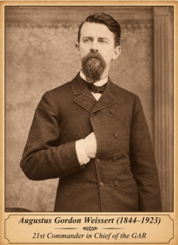 members of Matawan’s J. G. Shackelton Post transferred the post’s flags and duties to Raritan Post of the American Legion in Keyport. It was a symbolic passing of responsibility from veterans of the Civil War to veterans of the First World War.
That transfer is especially noteworthy because Matawan had organized its own American Legion Post 176 in 1919. The surviving historical account identifies the recipient as the Raritan Post in Keyport, not Matawan’s post. Why that arrangement was chosen remains a question for further research, but the transfer itself illustrates the close relationship between successive generations of veterans.
The GAR was different from the American Legion in one fundamental respect: its membership was tied to a single war and could not be renewed by later generations of veterans. With the passing of the last Union soldiers, the organization itself passed into history. Its influence, however, endured through Memorial Day traditions, veterans’ memorials, and the commitment to remembering those who served.
The story of the J. G. Shackelton Post belongs to Matawan’s larger history. It connects the men who fought in the Civil War with the community to which they returned, and it connects their remembrance to the veterans who followed them. Although the post no longer exists, its history reminds us that the names on military rolls and monuments were also neighbors, family members, and participants in the everyday life of Matawan.
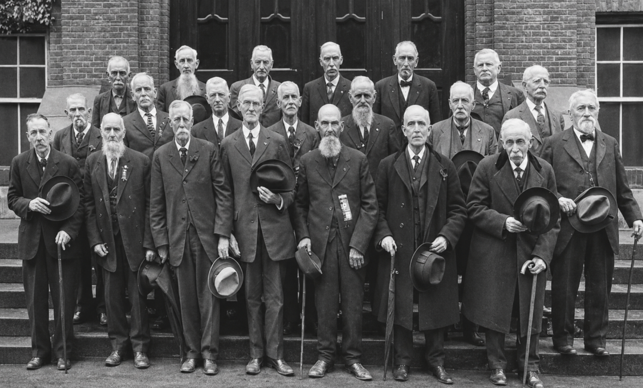 Although this is the last group picture of the Belvidere. IL Hurlbut GAR Post 164 circa 1924, it has a connection with Matawan. On the last day of the Civil War, my 2nd great grandfather, Charles Byron Glass (bottom row, far right), was attached to Company D of the 20th New York Volunteer Cavalry. His company was ordered to escort the 127 US Colored Infantry Regiment into Appomattox. Matawan residents David H. Hampton and William H. Shemo were assigned to the 127th. Hampton is buried in the Midway Green Cemetery in Aberdeen, Shemo in the AME Zion Churchyard on Johnson Avenue.
And in yet another of those quirky tidbits one uncovers while doing historical research: The Belvidere, IL GAR Post was named after Belvidere resident General Hurlbut. Matawan’s Shackelton was born in Belvidere, New Jersey.
— Mark Chidichimo