 The American Legion was barely a few months old when veterans in Matawan began discussing the formation of a local post. On October 2, 1919, the Matawan Journal announced that a meeting would be held the following evening at the Truck House to organize a post for the men who had served in the First World War. It was the beginning of an organization that would become part of Matawan’s civic life for generations.
The newspaper explained that Keyport had already started a post, attracting several members from Cliffwood. At a meeting in Leonardo the previous week, approximately 130 men had gathered and decided to establish a post drawing members from several nearby communities. Matawan’s organizers, however, wanted a post of their own, one that would welcome veterans from the borough, Middletown Township, and neighboring sections, regardless of the military districts from which they had entered service. The Journal reported that another meeting would be held on October 2 and that the organization was expected to be completed. Its appeal for a large attendance the following evening suggests considerable local enthusiasm. By December, the post was operating under the name American Legion Post No. 176, electing officers and planning community activities.
On December 18, 1919, the Matawan Journal reported the results of a meeting held three days earlier at the Truck House (built in 1878 on Jackson Street to house the Matawan Hook and Ladder Company, it stood near the current-day basketball court). William J. Duncan had been elected commander; Soren J. Johnson, vice commander; Everett H. Schock, adjutant; and Richard B. Carney, finance officer. Captain William H. Sutphin was chairman of the executive committee, assisted by Raphael C. Devlin and William A. Shepherd. The post was already planning a New Year’s Eve dance and a social gathering in January. The newspaper credited Sutphin and other members for their organizational work and reported the enthusiastic response: “Hurrah for Bill!”
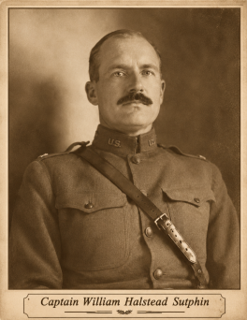 Captain William Halstead Sutphin (1887–1972) was one of Matawan’s most prominent citizens of the twentieth century. Born in Browntown and educated in Matawan’s public schools, he attended officers’ training at Plattsburgh in 1915 and served with the New Jersey Cavalry on the Mexican border in 1916. During the First World War, he served in France from December 1917 until May 1919, leaving military service as a captain in the Army Air Service. Sutphin had served as mayor of Matawan from 1915 to 1916 and would again hold that office from 1921 to 1926. He later represented New Jersey’s Third Congressional District in the United States House of Representatives for six terms, from 1931 to 1943. He died in 1972 and was buried in Arlington National Cemetery. His efforts on behalf of Post 176 formed one chapter in a long career of military and public service.
The Legion soon became more than a meeting place for veterans. Its members organized social events, supported one another, and participated in local affairs. By 1936, the History of Matawan 1686–1936 reported that Post 176 had 175 members and identified Adiel Strang as its commander. The post’s associated organizations also became important contributors to community life.
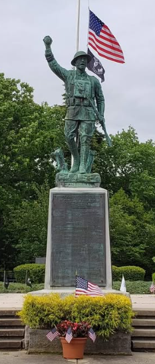
In April 1922, local women gathered at Geran’s Hall to organize an American Legion Auxiliary unit. Over the years, its members supported veterans’ hospitals, charitable causes, and relief work in Matawan. Perhaps their most lasting contribution was the monument that stands in Memorial Park. Through poppy sales, suppers, fairs, and other activities, the Auxiliary raised approximately $2,000 to purchase The Spirit of the American Doughboy, the sculpture by E. M. Viquesney. The statue was presented to Matawan Borough on Armistice Day, November 11, 1927. It remains a visible reminder not only of the men who served in the First World War but also of the women who worked to preserve their memory.
 A new generation joined in the Legion’s activities when the Sons of the American Legion organized a Matawan squadron in 1936. Its 32 members elected Harold Martin as captain, formed a baseball team, took part in parades, and volunteered to assist with the borough’s 250th anniversary celebration. These activities carried the post’s traditions of service and community involvement beyond the original generation of veterans.
The American Legion Hall also became a familiar part of Matawan life. The building had served other purposes over the years, including school classrooms and municipal offices, before becoming a venue for meetings and public gatherings. Like many community organizations, the post experienced periods of greater and lesser activity. After a period of inactivity, Post 176 was reactivated at a meeting held in the Burrowes Mansion in April 2013. MHS members Robert Montfort and Al Savolaine were instrumental in the unit’s reactivation.
From the organizational meetings at the Truck House in October 1919 to the monument in Memorial Park and the activities of succeeding generations, the history of American Legion Post 176 is woven into the larger history of Matawan. It is a story of veterans returning home, families supporting them, and neighbors working together to remember military service and strengthen their community.
— Mark Chidichimo