By Suzy Del Mage, Matawan Historical Society Researcher
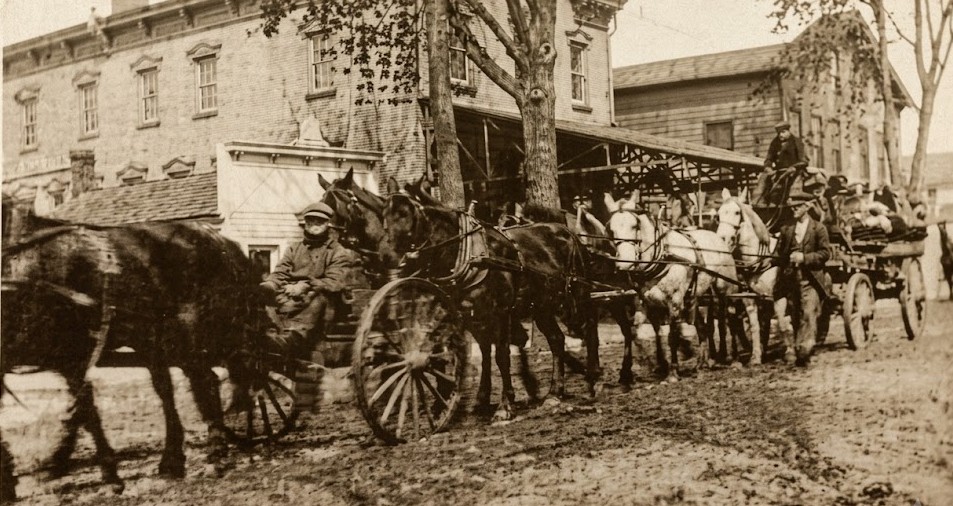
Figure 1 (image above): Heavy wagon teams on Main Street in front of the factory building.
The Heartbeat of Main Street: Matawan’s Carriage Factory
Long before automobiles lined Main Street, nineteenth-century life in Middletown Point—today’s Matawan, Monmouth County, New Jersey—moved to the rhythmic clatter of iron-rimmed wheels and the steady striking of blacksmith anvils. Positioned along vital trade routes connecting New Jersey’s farming interior to coastal docks and New York City markets, the village stood as a premier regional trade hub.
In early 1846, partners David Craig and Austin Reid established a carriage factory and blacksmith shop at 136 Main Street, laying the foundation for an enterprise that would span more than sixty years. Erected at the corner of Main Street and Morristown Road (today’s Ravine Drive)—a stretch known to locals as “Carriage Factory Hill”—the brick complex stood as the anchor of Matawan’s carriage trade. The site hummed with daily activity from its various resident businesses, while during the winter months, local youth gathered on the snow-covered hill for sledding.
Through changing partnerships, economic booms and busts, and fire scares, 136 Main Street became far more than a place of manufacture. From hosting church fairs and town events to echoes of the constant bustle of craftsmen at work, the facility grew into an enduring anchor of economic and social life in downtown Matawan.
Craig & Reid: An Enterprise is Born (1846–1863)
In early 1846, David Craig and Austin Reid established a carriage manufactory and blacksmith shop at the present location of 136 Main Street. The Reid & Craig factory custom built and stocked a variety of carriages that were shipped through key trade routes to Southern and New York markets. Their diversified business also sold groceries, dry goods, and materials commonly used in carriage manufacturing including paint, oil, steel, and iron.
To create a single destination for outfitting vehicles, they formed a separate partnership with William B. Foreman to include harness making. This allowed customers to purchase carriages, harnesses, collars, and other gear in one place. The complementary trades shared key supplies including leather for harnesses, folding tops, and interior upholstery.
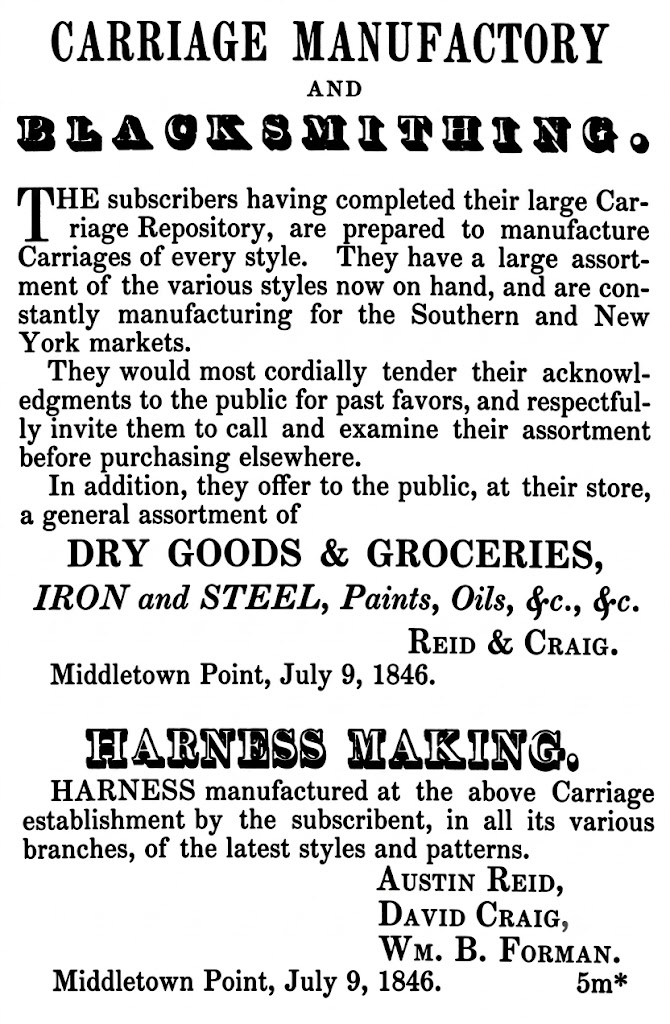
Figure 2: Advertisements launching the carriage, blacksmith, and harness making businesses.
Over the years, the firm developed an excellent reputation in the region. In October 1848, they sold a custom one-seat Bergen Carriage to a gentleman who saw the model elsewhere and traveled south to the factory. They sold it for $200 (an estimated 2026 value of $8,484) with a planned five-week completion time.
Expansion, Shipping, and Peak Success
As their manufacturing business grew, Craig and Read expanded their operations by integrating two partnerships into a coordinated manufacturing and shipping firm. Their firm Jaques, Reid, & Co. ran a “packet line” that coordinated trade between Matawan and New York City. The business had a dedicated storehouse to protect cargo from the elements, provided free freight barrels, and managed schedules and shipping routes. Meanwhile, the carriage factory oversaw financial, administrative, and inventory operations.
Craig and Reid increased their business holdings by purchasing the carriage factory’s land from Simon Arrowsmith on December 28, 1852. A few months later in March 1853, George H. Jaques departed the shipping business, dissolving the firm Jaques, Reid, & Co. by mutual consent. At the same time, the firm Reid & Craig dissolved their partnership to admit new business partner Garret Hiers, forming Reid, Craig & Hiers.
Three years later, in February 1855, long-time foreman Michael Burk was admitted as a partner in the Carriage and Harness Department, while the general store remained under Reid, Craig & Hiers. The existing partners expressed confidence in the “practical and capable mechanic,” while Burk pledged to the community that he would “satisfy a discerning public.”
Between 1856 and 1860, the firm achieved remarkable success at the Monmouth County Agricultural Fair in the Manufactured Articles division for their craftsmanship, winning the following awards:
1856
- 1st Place for Best Display of Carriages
- 1st Place for Double Harnesses
1857
- 1st Place for Best Display of Carriages with a $5 award
- 1st Place for Double Carriages with a $5 award
- 2nd Place for Single Carriages with a $5 award
1858
- 1st Place for Best Display of Carriages
- 2nd Place for Second Carriages
1859
- 1st Place for Best Display of Carriages with a $5 award
- 1st Place for Double Carriages with a $5 award
- 1st Place for Market Carriages with a $5 award
1860
- 1st Place for Best Display of Carriages
- 1st Place for Double Carriages.
A Costly Legal Reckoning: Debt and Lawsuits
Despite their achievements and past successes, overwhelming debts caused Reid and Craig’s company to be financially dismantled when those debts led to lawsuits and forced the sale of key commercial holdings. The Civil War (1861–65) likely compounded their financial difficulties by disrupting the company’s established trade routes to the South.
On March 27, 1861, creditor James R. Radford won his breach-of-contract lawsuit against the struggling business for $351.70 in damages. On October 22, 1863, Radford bought the factory lot at auction for $30, taking the land, subject to existing senior mortgages and liens.
Because the firm’s main debts remained unpaid, on November 14, 1865, the New Jersey Court of Chancery ordered the seizure of real estate to satisfy more than $20,000 in debts (an estimated 2026 value of $421,538) owed to local banks, partners, and estates. The Monmouth County Sheriff publicly auctioned their land at Craig’s house on January 17, 1866. James A. Reid submitted the winning bid of $5,050 securing title to the factory land and overriding Radford’s junior claim. Due to the ongoing legal issues, it is unclear when the factory official closed.
Brannin & Co.: Secret Loans and the Pivot to Agriculture (1866–1872)
Within a few months, a new firm was preparing to operate at the former Reid & Craig site. White, Brannin & Co. announced their “New Carriage Manufactury at the old stand of Reed & Craig” on March 16, 1866. The partners shifted focus from luxury coaches to local transportation and agriculture needs by offering carriages, coaches, market and farm wagons, repair work, wheelwrighting, and blacksmithing.
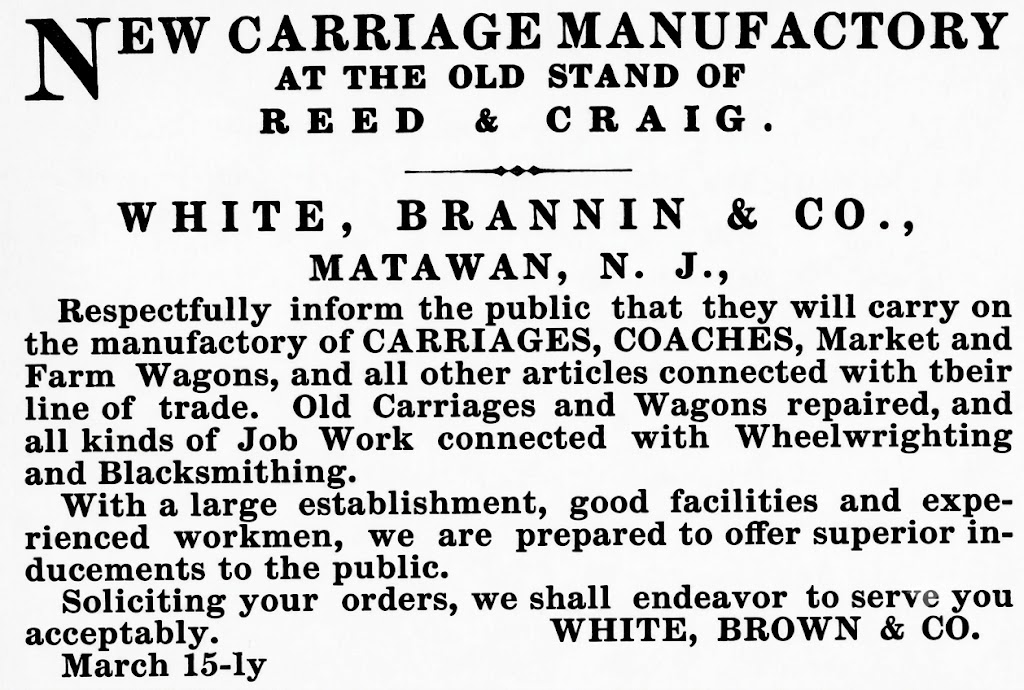
Figure 3: Advertisement for the new White, Brannin & Co. factory
In late 1867, James Bowne Reid acquired the factory land following the death of his father, James A. Reid, becoming the firm’s landlord and its primary financial partner.
In January 1868, two years after the firm was established, one of the firm’s partners, Gordon D. White, withdrew from the firm, taking a substantial portion of the company’s capital with him. Desperate to keep the factory operational, partners Luke Brannin and Alfred S. Dunlop borrowed $4,000 from eight affluent Matawan residents without the knowledge of their primary financial partner, James Bowne Reid.
Dunlop dissolved his partnership with Brannin & Co. two years later in May 1870 and left his hometown of Matawan to “try his fortunes in the far West.” Six years later, in April 1871, Brannin & Co. announced the factory was closing. They liquidated assets a year later on March 11, 1872, and left the building empty.
Jacob Truex: Blacksmithing, Investor Backing, and Sole Ownership (1872–1876)
Just two months after the liquidation, in May 1872, Jacob Truex opened the blacksmith operations at the factory. Operating as Truex & Co., his shop remained busy over the summer, completing a wagon for a Mr. Teals of Brooklyn, and finalizing Captain W. S. Hornor’s buggy in August.
Five months later, on October 5, 1872, the full carriage factory operations resumed when eight gentlemen—Dr. J. P. Geran, William Spader, Charles W. Fountain, James H. Hornor, Dr. J. G. Shackelton, Dr. F. K. Travers, Rensselaer W. Dayton, and William A. Fountain—assumed ownership under the firm name J. P. Geran & Co. Edward Drayton oversaw the financial administration as secretary and treasurer while the practical supervision was handled by Truex, “a practical and experienced workman.” The firm manufactured both custom and ready-made carriages.
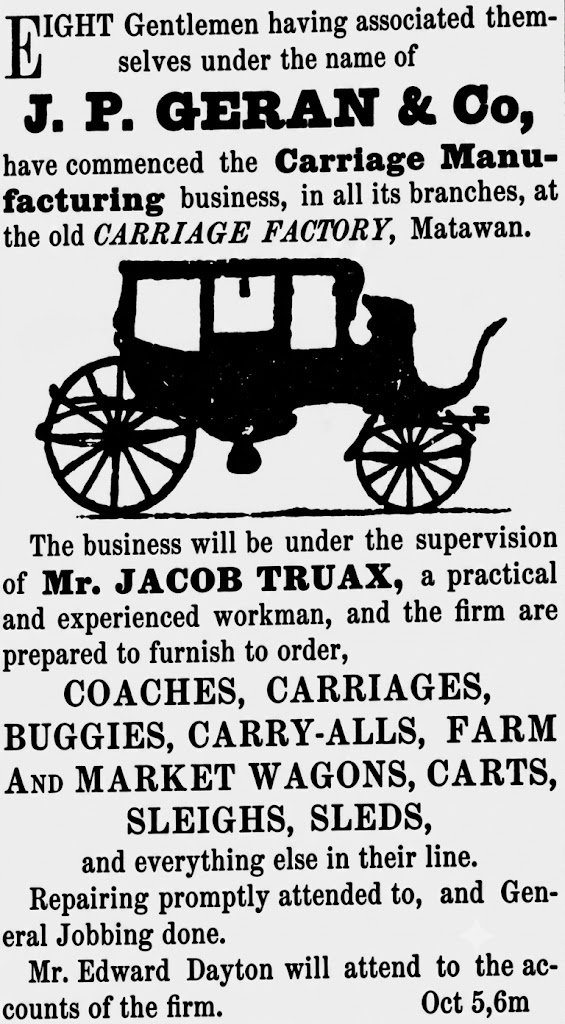
Figure 4: J. P. Geran & Co. reopened the carriage factory.
Just nine months later, on June 28, 1873, Truex purchased the full interest of the “Carriage making business” from J. P. Geran & Co. Now Operating under the name of the Matawan Carriage Factory, the facility advertised repairs and sold “Carriages, Sleighs, or Vehicles of Every Description at prices to suit the times.” Truex held a public sale at the factory on May 2, 1874, to settle the accounts with J. P. Geran & Co. and to liquidate some inventory, including “3 new Buggies, 1 Dr’s. Phaeton, 1 light two-seat Rockaway, 1 second-hand Buggy, and 1 second-hand Market Wagon.” He assured the public that the sale did not signal the factory’s closure. Unfortunately, he only sold three carriages.
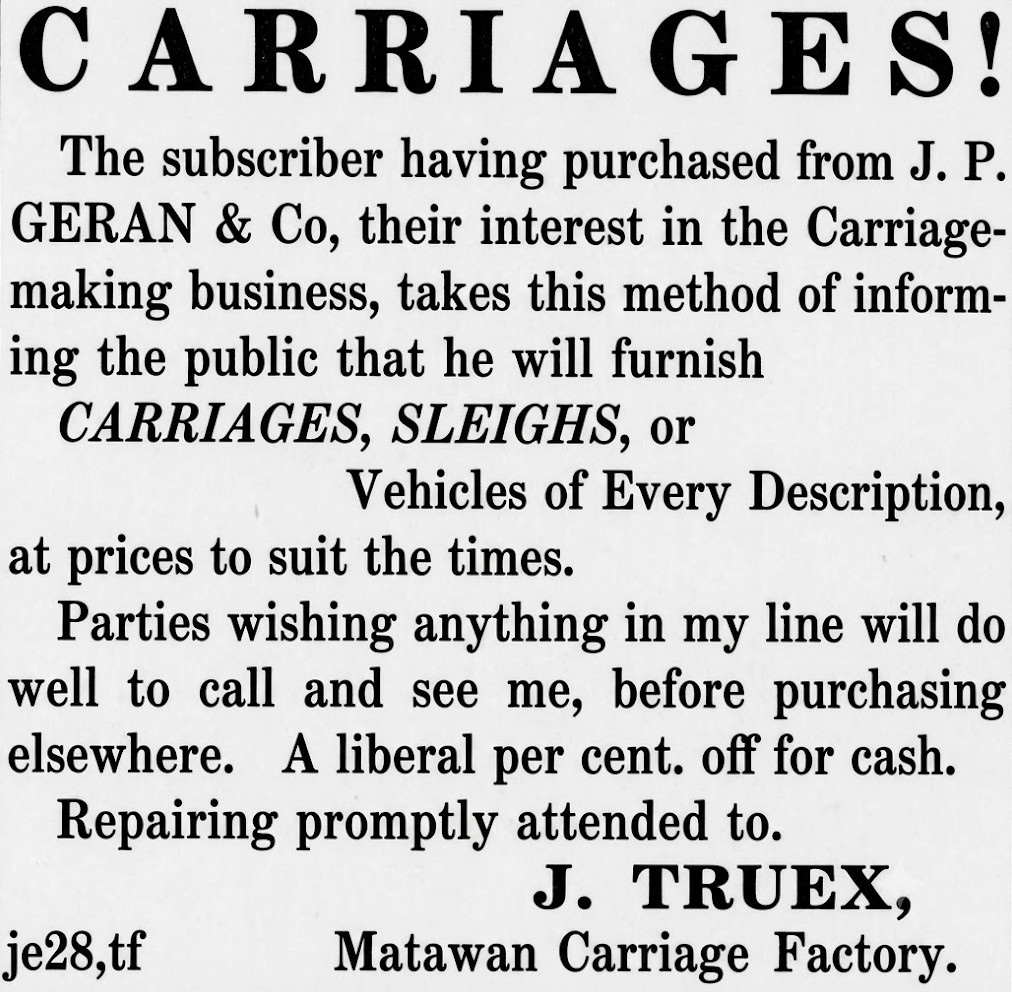
Figure 5: Jacob Truex assumed full ownership of the Matawan Carriage Factory.
In February 1873, landlord James Bowne Reid was paid $750 for a strip of land taken by the town to widen the road “toward Morristown,” which led to the removal of a fence and multiple buildings including shops, sheds, and barns.
The main factory building served various businesses over the years. In late 1873, Mr. Emmons relocated his blacksmith shop there after his previous building was torn down to widen Morristown Road (present-day Ravine Drive). G. D. Robertson & Co. opened a shoe factory on the third floor in early October 1874, but the business folded before the New Year. Robertson quietly departed with nearly all the machinery, leaving local creditors Mealio & Sickels to pursue his outstanding debts.
Truex’s carriage factory closed in early November 1876, when he relocated from Matawan to Fort Plain, Montgomery County, New York.
Abijah Compton: A Brief Revival (1877–1878)
Following a ten-month closure, local carriage maker Abijah A. Compton reopened the Matawan Carriage Factory on September 15, 1877. Under his management, the facility offered repair services, built custom carriages and wagons, and offered to source inventory from outside manufacturers. This chapter appears to have been short-lived, with the factory likely closing sometime between April 1878, when its regular advertisements disappeared from the Matawan Journal, and May 1880, when a subsequent article noted that the facility was closed.
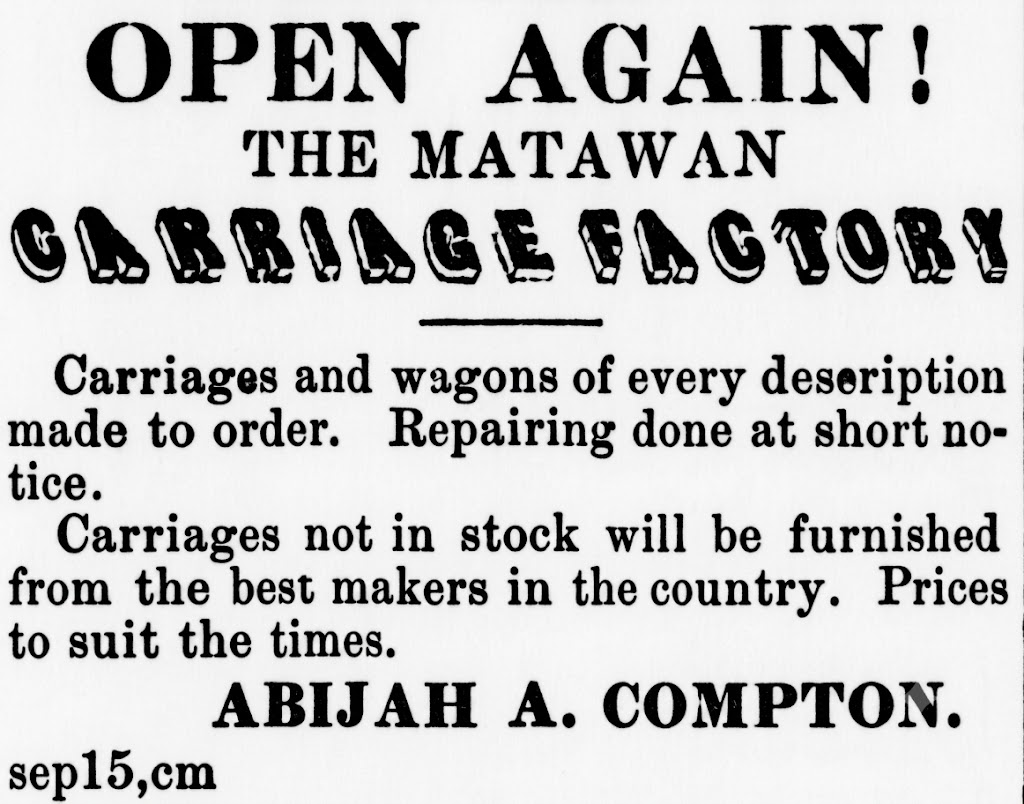
Figure 6: Matawan Carriage Factory opened by Abijah A. Compton.
An Empty Building: Structural Decay and Near Disasters (1880–1883)
While the carriage factory remained unused, the buildings fell into disrepair. In July 1880, the “dilapidated frame extension” was dismantled before it “would soon have torn itself down.” Less than a year later, in June 1881, wagon sheds behind the factory collapsed around 2 a.m., causing only minor damage to a buggy and sleigh stored inside. Around 8 p.m. on Wednesday evening, July 6, 1883, three young boys started a fire under the old wagon shed. Thankfully, the growing fire was discovered and extinguished before significant damage was caused. The Matawan Journal humorously wrote “Such boys ought to be kept in the house after dark.” Despite years of physical neglect and near disasters, the Main Street location would soon see a major revival.
Levi S. Emmons: A Cooperative Hub of Local Artisans and Trades (1884–1888)
Levi S. Emmons, a blacksmith, opened a new multi-disciplinary business at the Matawan Carriage Factory on April 25, 1884. He balanced specialized carriage commissions with everyday repairs, blacksmithing, wheelwrighting, horseshoeing, and more. Emmons sold various stock wagons, buggies, carriages, and sleighs at “low figures” and offered custom-built vehicles using the best materials. The business ventured into a different market with sporty, doorless, open-style phaeton carriages that were typically drawn by one or two horses and were faster and more stylish than a family carriage.
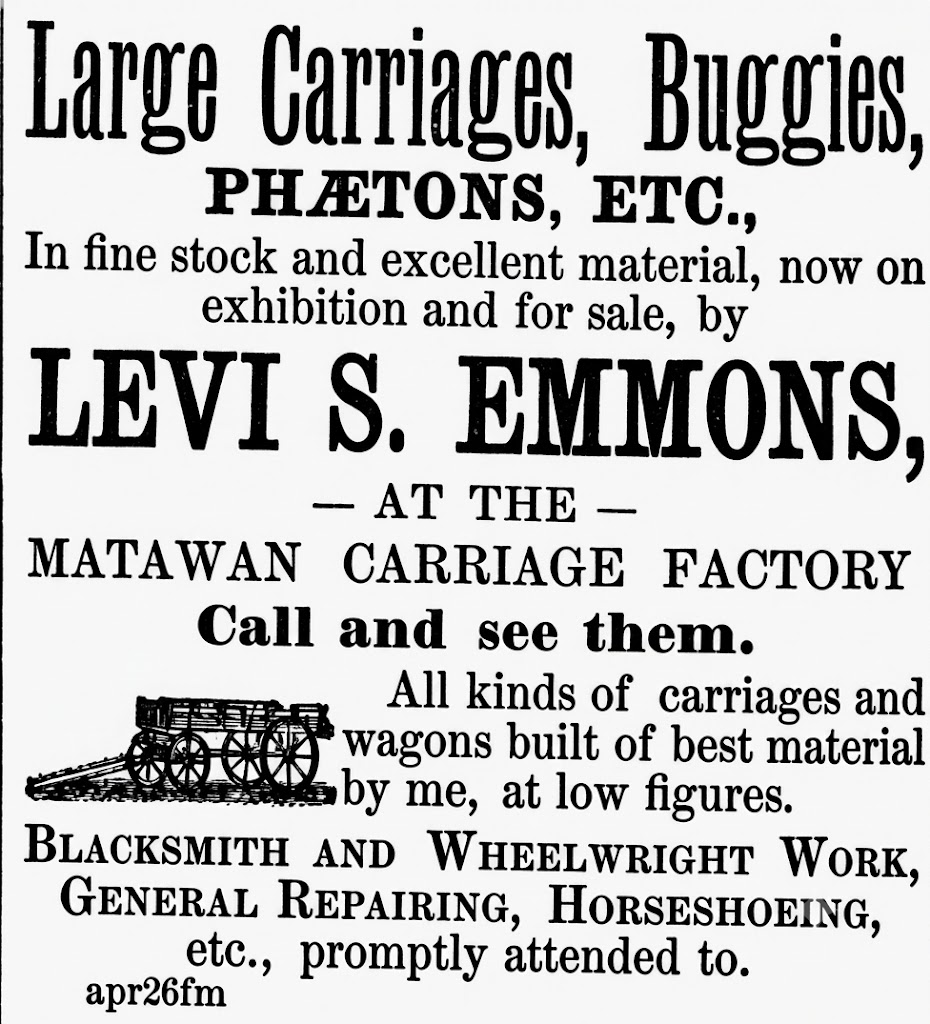
Figure 7: Levi S. Emmons reopens the Matawan Carriage Factory.
In July 1886, the property at 136 Main Street was a bustling, cooperative industrial hub where local craftspeople worked together under one roof to build carriages from start to finish. The complex featured a split brick building fronted by an ornamental wooden cornice, with a backyard shed. Inside, the building was designed with purpose: heavy, noisy, and fire-prone work was kept in the basement, where the blacksmiths and wheelwrights forged iron fittings and assembled sturdy wooden wheels on a solid foundation. On the main floor, artisans shaped the wooden bodies of the carriages on one side, while the other side served as a showroom to display finished models for customers. On the second floor, away from the smoke, soot, and vibration below, painters and trimmers applied the final polished coats and tailored the leather and fabric interiors, bringing each handcrafted carriage to life.
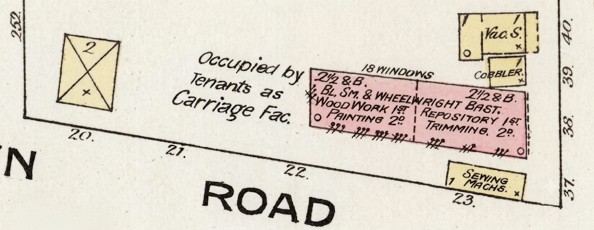
Figure 8: Sanborn Fire Map showing the Carriage Factory property in July 1886.
Four years after establishing the factory, Emmons relocated his business to property he purchased at the corner of Jackson Street and Morristown Road (present-day Ravine Drive), just 100 yards away. On November 22, 1888, at 1 p.m., he liquidated inventory at a public sale, selling his wagons, carriages, sleighs, and a horse.
Robert Winters: Bringing Newark’s Horse Collar Trade to Matawan (1889–1892)
Once Emmons relocated, the landlord renovated the property’s interior and exterior to accommodate new business owner Robert Winters. Winters relocated his Newark, Essex County, New Jersey, horse collar business to Matawan to take advantage of the town’s freight facilities and to buy straw from local farmers to fill the collars. On January 1, 1889, Winters moved some equipment into the building to train a small workforce and completed the heavy equipment move in March. That same year, “according to his unusual custom,” Winters closed the facility over the Fourth of July holiday to provide his staff to a week of vacation.
To promote the business and obtain orders, Winters frequently sent his employee, E. J. Cullen, on business trips to Southern New Jersey, Pennsylvania, and New York State. By January 1891, the business employed sixteen men. Just three years after opening, Winters closed operations in June 1892 and returned to Newark. During the subsequent period of industrial vacancy, former tenant Levi Emmons utilized the space to store wagons until the building was rented in June 1896.
The Vacant Building Used as a Civic Hub (1892–1896)
Beyond its industrial output, the Matawan Carriage Factory served as a vital pillar of local community life and a key landmark in downtown Matawan. Under various tenants and owners, the large facility was generously made available to local organizations. When manufacturing operations paused between 1892 and 1896, the factory did not sit quiet; instead, the spacious building was repurposed to host parades, bazaars, lodge meetings, and seasonal festivals.
When the 1894 Firemen’s Thanksgiving Day Parade concluded outside the factory, the department’s “lady friends” and members served refreshments inside. Owner James Bowne Reid frequently opened the facility to the Methodist Church that hosted its annual week-long fall bazaars there in 1893 and 1894, complete with vendor booths, themed 25- to 35-cent nightly dinners, and music from the Matawan Band. The church also hosted a festival and supper in July 1894 there.
Community use continued into the spring of 1896, with the “Colored Lodge” utilizing a portion of the building for meetings and events, including a cake walk on May 15. Shortly after, a Baptist Decoration Day festival on May 28 offered 25-cent suppers and sold out of almost all its goods—except for the ice cream.
Brown & Longstreet: A Modern 19th-Century Dealership (1896–1897)
In June 1896, local business operations revived in the factory after four years of vacancy. The property was improved and used as a premier regional “carriage repository” by a new firm, The Matawan Carriage Company, that was formed by businessmen Edward I. Brown and H. H. Longstreet. There was significant financial backing with “no lack of capital,” which was used to purchase inventory from leading manufacturers in New York’s Watertown, Syracuse, and Binghamton, and from Columbus, Ohio.
Showcasing inventory was critical to the firm’s success. To attract customers, they built a 12-by-30-foot platform along Main Street for prominent outdoor displays. Also, a rear hoisting machine was installed to access the second-story showroom that featured buggies, runabouts, phaetons, surreys, traps, business wagons, jump-seat wagons, and carts at various price points.
The basement served as a workshop for blacksmithing and woodworking to strategically conceal the manufacturing operations. In April 1897, the business expanded to include carriage painting to create a full-service firm targeting repeat business by offering both the mechanical repairs and cosmetic bodywork needed to combat the heavy wear, mud, and weather damage typical of horse-drawn transit.
Price points in 1896 depended on the vehicle’s utility and design. A basic farm wagon cost $30, while a top grocery wagon sold for $60. Meanwhile, a “1/2-platform, elliptic or duplex spring delivery wagon” could be purchased for $37.50 (an estimated 2026 value of $1,197, $2,394, and $1,496 respectively).
On Wednesday morning, July 7, 1896, the opening of the shop turned chaotic when an uninvited guest made a dramatic entrance:
A weasel about a foot long jumped in the window of the blacksmith department of the Matawan Carriage Company on Wednesday morning as the place was being opened. There was a little consternation at first and then a chase for the animal with iron bars, which eventually resulted in the death of the weasel at the hands of Mr. Scott. The weasel was being chased by a one-eyed cat when it entered the shop.
Charles A. Scott: A Successful Ten-Year Run Cut Short by Circumstance (1897–1907)
One year after opening the facility in July 1897, Brown and Longstreet transferred interest in the repair department to Charles A. Scott, who rebranded the operation as the Carriage & Machine Shops. Scott also remained the carriage factory’s Superintendent.
In early May 1899, just ahead of the harvesting season, the factory expanded its reach into the agricultural market by securing an agency for Walter A. Wood harvesting machinery. This was designed to draw area farmers to the business for new seasonal equipment, while increasing sales of replacement parts and repair services. To further serve the agricultural and industrial community, Scott also expanded shop offerings to include horseshoeing and brickyard supplies.
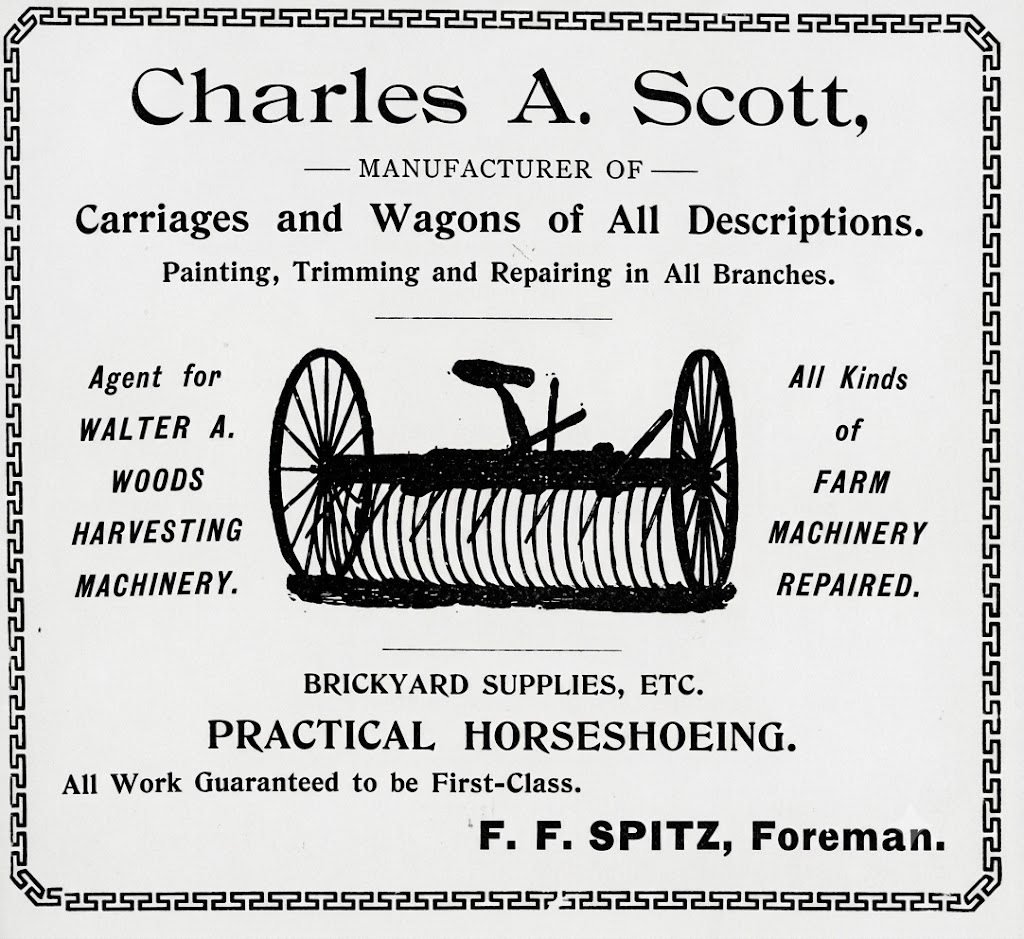
Figure 9: Charles A. Scott’s Carriage and Machine Shop advertisement.
By early January 1907, the estate of James Bowne Reid sold the carriage factory property to Daniel E. Mahoney, marking a major turning point for the historic location and the beginning of a transition for its long-time tenant, Charles A. Scott. Mahoney planned to remodel the structure into a modern grocery store, a change that would require Scott to relocate his business. Adding to the disruption, Scott was also notified that he must vacate his personal residence across town by April 1.
Before Scott could relocate, he faced another setback on the night of Friday, January 25, 1907, when a fire broke out in the blacksmith shop around 10 p.m. Disaster was averted thanks to the swift response of the local fire engine company, which deployed two streams of water and extinguished the blaze with minimal damage. Unable to secure a suitable location for his business, Scott retired from the blacksmith and carriage trade on May 13, ending more than a decade of business ownership and six decades of carriage manufacturing at 136 Main Street.
The Legacy of the Carriage Factory
Charles A. Scott’s retirement in May 1907 and Daniel E. Mahoney’s new grocery store marked the end of an era at 136 Main Street. For more than sixty-one years, the brick complex at the corner of Main Street and Ravine Drive served as an essential engine of Matawan’s economic and community life.
Through changing partnerships, financial panics, fires, and shifting market demands, the facility adapted alongside the town—evolving from a mid-nineteenth-century carriage and blacksmith shop into an agricultural equipment center, a multi-craft cooperative, and a premier regional vehicle dealership. As retail trade reshaped downtown, the opening of Mahoney’s grocery store marked the final chapter for industrial carriage operations. Though the industrial sounds of the factory at 136 Main Street ultimately fell silent, the complex remains deeply rooted in local history as the enduring heartbeat of “Carriage Factory Hill.”
Interested in the complete story with sources? Download the full article here: 136 Main Street Matawan FINAL with sources.
NO COMMENTS